
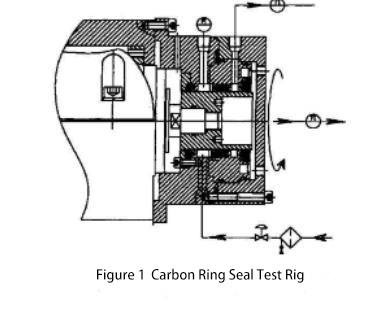
The test rig used for carbon ring seals is shown in Figure 1. Carbon ring seals shall undergo both static tests and dynamic tests. After completion of the sealing tests, the seal components must be inspected.If any of the following conditions are observed, the carbon ring seal shall be considered unqualified:
Contact wear of the carbon ring,mechanical fatigue or thermal fatigue (such as wear or thermal cracking),a noticeable rise in the temperature of the carbon ring seat during testing.Test Instruments:Metal-tube float flowmeter or glass rotameter, accuracy class 1.6 ,flow, pressure, and differential pressure transmitters, with an accuracy of ±5% of full scale.
Static Test
The static sealing test is carried out with the shaft kept stationary. The sealing pressure is gradually increased step by step to the maximum static pressure P, and then reduced sequentially to 75%P, 50%P, and 25%P.At each pressure level, the pressure shall be maintained and stabilized for a certain period (3–5 minutes), and the static leakage rate of the seal shall be recorded.
Dynamic Test
The dynamic test shall be conducted according to the following procedure:
First, gradually increase the shaft speed to the maximum continuous speed. At each speed stage, stabilize the operation for 3–5 minutes and record the seal leakage rate.
Second, increase the speed to the trip speed (approximately 110% of the maximum continuous speed), maintain stable operation for 15 minutes, and record data every 5 minutes.
Third, reduce the speed to the maximum continuous speed and operate steadily for 60 minutes, recording test data every 5 minutes.
Then, reduce the speed to zero and decrease the pressure to the minimum sealing pressure.
After that, increase the speed again to the maximum continuous speed and apply pressure in accordance with the static sealing test procedure. At each pressure stage, stabilize for 2 minutes and record the data.
The leakage rate during the dynamic sealing test shall be less than the specified maximum allowable leakage rate.
Cartridge Carbon Ring Seal
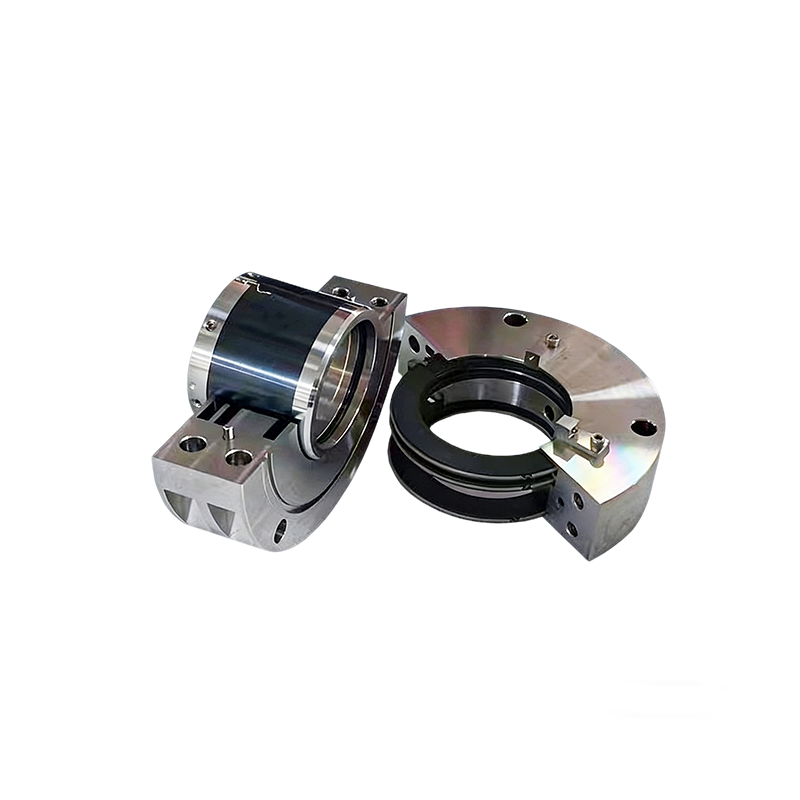
Carbon ring seals are generally designed as cartridge. Under high-pressure and high-speed operating conditions, multiple carbon rings are often arranged in series to achieve multi-stage sealing.
The carbon rings are installed inside a carbon ring holder. During disassembly, special dismantling tools are required to remove the carbon ring seal assembly.
When the sealing medium is the process medium, the carbon ring holder shall be made of corrosion-resistant materials. Carbon ring seals can be used for both gas sealing and oil sealing applications.
The typical design service life of a carbon ring seal is five years. However, in chemical process systems, seals are usually replaced during major overhauls (generally every three years), even if the carbon ring seal still meets operational requirements.
During installation, it must be ensured that there are no impurities or solid particles inside the sealing chamber, in order to prevent scratching of the carbon rings during high-speed operation.