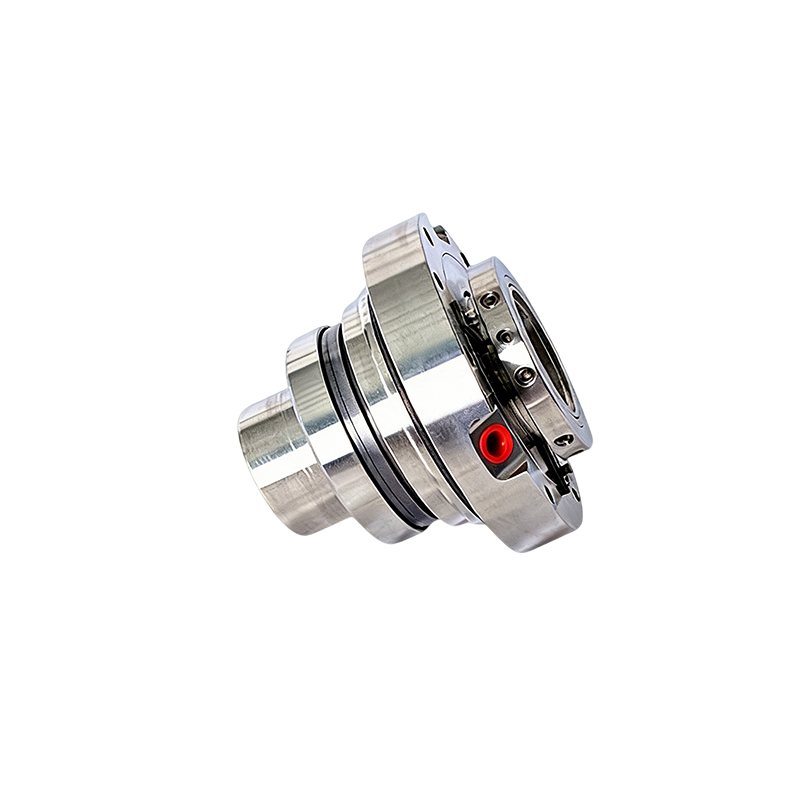
| Comparison between Dual Dry Gas Seals and Dual Mechanical Seals |
| | Dual Dry Gas Seals | Dual Mechanical Seals |
| Standard | API 682 Plan 74 | API 682 Plan 53,Plan54 |
| Scope of application | Sour water, benzene, xylene and other toxic and harmful media |
| Structural Features | Both stages adopt dry gas seals, with pressurized nitrogen used as the sealing medium. The nitrogen pressure is maintained 0.15 MPa higher than the pump seal chamber pressure, allowing the seal to operate in a non-contact mode.The auxiliary system is simple, consisting of a skid-mounted nitrogen control system equipped with a low-pressure leakage alarm. The system requires no maintenance during operation. | Both stages adopt mechanical seals, with pressurized sealing oil used as the sealing medium. The oil pressure is maintained 0.15 MPa higher than the pump seal chamber pressure, and the seal operates in a contact mode.The auxiliary system is relatively complex. It consists of a separate oil supply tank, where the sealing oil is pressurized by an external gas source. A cooling water circulation system is provided to cool the sealing oil. The system is equipped with a level alarm and a low pressure alarm. During operation, operators are required to periodically refill the sealing oil. |
| Safety | The system offers excellent safety performance. The sealing gas (nitrogen) isolates toxic and hazardous media from the atmosphere. Only a very small amount of nitrogen enters the pump chamber, ensuring that the process medium does not leak into the atmosphere at all. | The system offers good safety performance. The sealing oil isolates toxic and hazardous media from the atmosphere. Only a small amount of sealing oil enters the pump chamber, ensuring that the process medium does not leak into the atmosphere. However, a small amount of sealing oil may leak into the environment, which may cause environmental impact. |
| Environmentally Friendly | An environmentally friendly sealing solution. The process medium can be completely prevented from leaking into the environment, with only a very small amount of nitrogen released, which causes no environmental pollution. | Slightly inferior environmental performance. The process medium can be completely prevented from leaking into the atmosphere, but a small amount of sealing oil may leak into the environment, causing some site contamination. |
| System Maintenance | The system requires no maintenance and uses plant pipeline nitrogen as the sealing gas. However, the nitrogen pressure must always be higher than the seal chamber pressure. | High maintenance requirements. Due to sealing oil leakage, the site environment may become dirty, increasing cleaning workload. In addition, as the sealing oil is consumed, the oil tank needs to be refilled regularly. |
| Service Life | The service life is more than 3 years. Since the dry gas seal operates in a non-contact mode, the seal life is greatly extended. In applications with moderate corrosion, the service life can exceed 25,000 hours. | Service life is about 1 year. Because the seal faces operate in contact and experience wear, the average service life of domestic mechanical seals is about one year. Achieving a 25,000-hour service life would require higher-grade seal materials and increased cost. |
| Resistance to Process Upsets and Vacuum Conditions | Because the seal face medium is nitrogen, pump dry running and process fluctuations have almost no effect on the seal life. | Strong adaptability. Since the seal face medium is sealing oil, pump dry running and process fluctuations have little impact on the seal life. |
| Power Consumption | Power consumption is low, as the seal faces run without contact, typically only about 5% of that of conventional mechanical seals. | High power consumption. Friction between the seal faces generates additional power loss. |