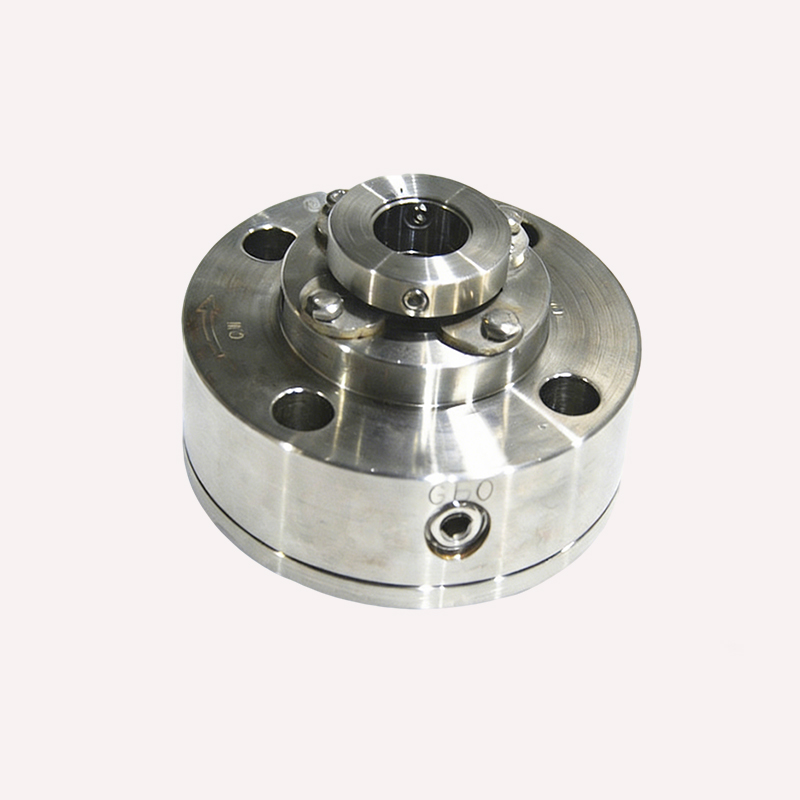


DGS-CT is a tandem dry gas seal, suits high-pressure applications, large shaft diameters, and demanding operating conditions. Non-contacting seal faces running.The seal uses two sets of tandem friction pairs. The primary seal serves as the main seal, while the secondary seal provides safety protection. The surrounding seat design effectively reduces equipment damage caused by a broken seat.The auxiliary seal uses a high-performance polymer seal. It provides good temperature, pressure, and corrosion resistance.
Both seal stages can withstand the full pressure of the process medium. If the primary seal fails, the secondary seal can still operate under the full medium pressure.
The secondary seal does not require a separate nitrogen supply. Both primary and secondary seal gases come from the process gas. A small amount of process gas may enter the atmosphere through secondary seal leakage.
Both unidirectional and bidirectional grooves are available. The cartridge design simplifies installation and dismantling.
The seal suits applications without an on-site nitrogen supply. It also suits applications where leaked process gas requires recovery. This design provides high safety and reliability for demanding compressor applications.
Interface Details
● A Primary Seal Gas Process gas/External gas
● B Primary Leakage GasVent to flare/Recovery system/Vent to safe location
● C Secondary Leakage GasVent to safe location
● D Separation Gas Nitrogen/Instrument air, nitrogen is preferred
Applications
● LNG Refrigerant Compressor
● Natural Gas Pipeline Compressor